allergist report
take your diary to the appointment.
“How has it been?” is a hard question to answer from memory. The report answers it with your own days.
What’s in it
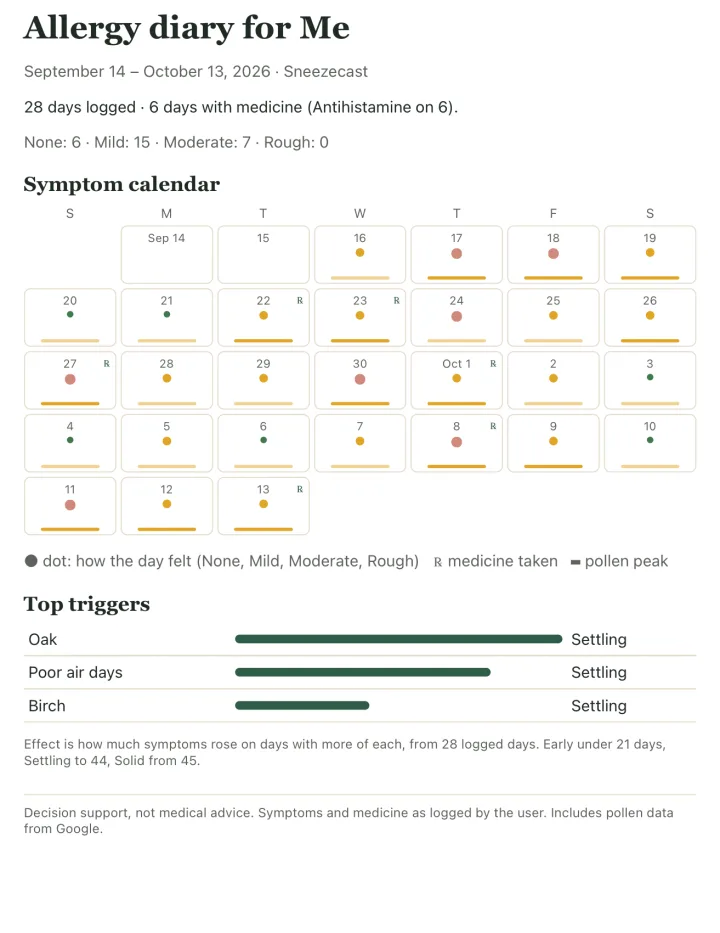
- The period it covers, 30 or 90 days, and how many of them you logged.
- How many days you took medicine, by kind: antihistamine, nasal spray, inhaler or other.
- A count of days by how they felt: none, mild, moderate, rough.
- A symptom calendar: a dot for how each day felt, a mark on the days you took medicine, and a line for that day’s pollen peak.
- Your top triggers with how strongly each moved your symptoms and how sure the read is (Early, Settling or Solid).
How to make one
In Triggers, open Allergist report, pick 30 or 90 days, and send the PDF with the share sheet: Mail, Messages, AirDrop or Files. It needs at least a week of logged days.
The PDF goes only where you send it. Sneezecast doesn’t keep a copy, and your diary never leaves your phone otherwise.
What it isn’t
It’s your diary, as you logged it: symptoms and medicine in your own words, next to the pollen of each day. It isn’t a test or a diagnosis. The report says so on every page.
The allergist report comes with Sneezecast Plus.